Introduction
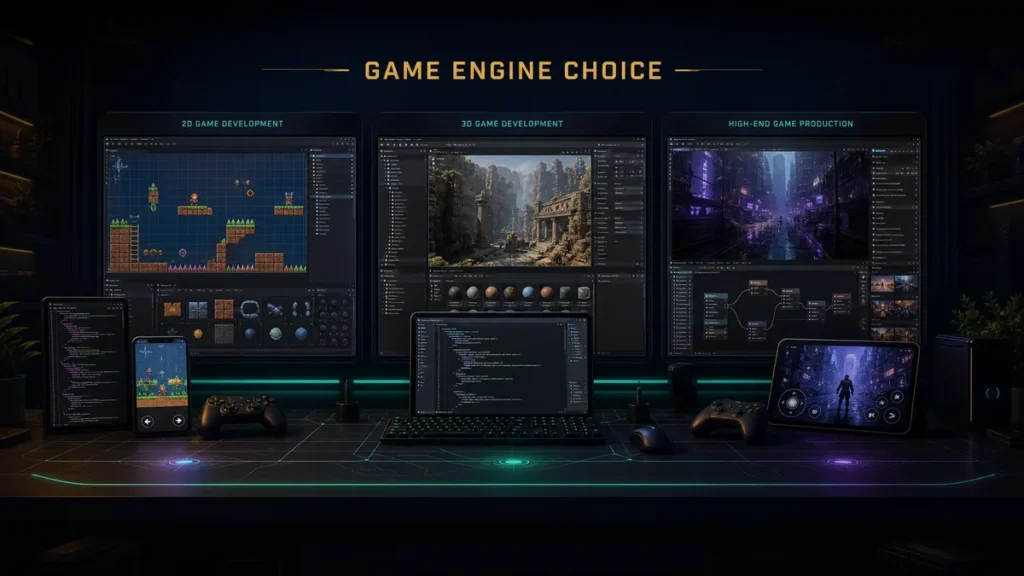
Choosing the right game engine affects development speed, performance, cost, team workflow, and long-term scalability. Unity, Godot, and Unreal are all strong options, but the best choice depends on the game type and project goals.
Unity
Unity is one of the most popular engines for mobile games. It is widely used for 2D, 3D, casual, puzzle, simulation, racing, and action games.
Best for
- Mobile games
- Casual and hyper-casual games
- 2D and 3D games
- Cross-platform builds
- Fast prototyping
- Teams that need many plugins and SDKs
Strengths
Unity has a large ecosystem, strong mobile support, many assets, and wide SDK compatibility. It is practical for games that need ads, analytics, in-app purchases, and multi-platform release.
Considerations
Unity projects need good optimization practices, especially for lower-end devices. Asset management, build size, and performance should be reviewed throughout development.
Godot
Godot is lightweight, flexible, and open-source. It is often a good choice for 2D games, smaller teams, and projects that need fast iteration.
Best for
- 2D games
- Indie games
- Lightweight projects
- Prototypes
- Teams that prefer open-source tools
Strengths
Godot is simple to use, fast to install, and comfortable for 2D production. It gives developers more control and does not require licensing fees.
Considerations
Godot’s ecosystem is smaller than Unity’s. Some third-party SDKs and monetization tools may require extra integration work.
Unreal Engine
Unreal is powerful for high-end 3D visuals, realistic rendering, and complex production. It is often used for premium games and visually ambitious projects.
Best for
- High-quality 3D games
- Console or PC projects
- Realistic environments
- Advanced graphics
- Larger development teams
Strengths
Unreal offers strong rendering, visual scripting through Blueprints, and powerful production tools. It is excellent when visual quality is a major selling point.
Considerations
For small mobile games, Unreal can be heavier than needed. It may require more optimization and a larger production workflow.
Which Engine Is Best for Mobile Games?
For most mobile games, Unity is often the most practical choice because of its ecosystem, mobile support, and SDK compatibility.
Godot can be a great fit for lightweight 2D games and smaller projects.
Unreal is best when the project needs high-end 3D visuals or advanced rendering.
Decision Guide
Choose Unity if you need mobile-first production, SDK support, and cross-platform flexibility.
Choose Godot if you need lightweight 2D development and open-source control.
Choose Unreal if you need premium 3D visuals and advanced rendering.
Conclusion
There is no single best engine for every game. The right choice depends on genre, budget, visual target, platform, monetization, and team experience.
CTA: Not sure which engine fits your game? FingerNic can help plan the right technical path before production begins.
—